

AI-powered CRM systems are transforming how businesses handle high-ticket sales. These tools solve challenges like long sales cycles, complex decision-making, and the need for personalized communication. Here’s how AI CRM can help:
- Predictive Lead Scoring: AI analyzes behavior to prioritize leads most likely to convert, saving time and boosting efficiency.
- Automated Personalization: Tailored emails, proposals, and follow-ups keep prospects engaged throughout the sales journey.
- Lead Nurturing: AI ensures timely, relevant follow-ups, even for busy sales teams.
- Churn Prediction: Identifies at-risk clients and triggers retention strategies to protect revenue.
- AI Chat and Voice Automation: Provides instant, natural responses 24/7, crucial for high-value clients expecting quick answers.
For US businesses, aligning AI CRM tools with local standards – like date formats, currency, and compliance laws – is vital. Companies like Clearnet Marketing offer tailored solutions to simplify these processes and help businesses achieve better sales outcomes. By leveraging AI, you can focus on building relationships while automating repetitive tasks, improving efficiency, and driving revenue growth.
This AI CRM System Automates Your Entire Sales Process (No-Code)
Key AI CRM Features for High-Ticket Sales
Managing long and intricate high-ticket sales cycles comes with its own set of challenges. The following AI CRM features are designed to tackle these pain points, offering targeted solutions for every stage of the sales journey.
Predictive Lead Scoring
Predictive lead scoring leverages advanced algorithms to analyze behavioral patterns and engagement signals, helping identify which leads are most likely to convert. Instead of relying on gut feelings, the system evaluates actions like email opens, website visits, content downloads, and pricing page views. It then compares these behaviors with historical data to assign each lead a score.
Did you know that sales reps can spend up to 40% of their time chasing leads that go nowhere? By using AI to predict conversion likelihood, your team can focus on leads that truly matter. Businesses that adopt predictive tools report a 30% boost in sales efficiency. This data-driven approach ensures consistency across teams, aligns marketing and sales efforts, and often uncovers unexpected patterns that indicate conversion potential.
Automated Personalization at Scale
High-ticket sales prospects expect a personal touch in every interaction. AI-powered personalization makes this possible by automatically generating tailored content based on a prospect’s profile, behavior, and stage in the sales journey.
The system taps into your content library, case studies, and product details to craft emails, proposals, and follow-ups that feel individually tailored. It even considers factors like industry, company size, and the best time to engage. With only 23.9% of sales emails being opened, delivering messages that feel relevant and valuable can make all the difference. This level of personalization keeps prospects engaged throughout the lengthy sales process.
AI-Driven Lead Nurturing and Follow-Up
High-ticket sales often require consistent, meaningful touchpoints over extended periods. AI-driven lead nurturing automates this process, ensuring timely and relevant follow-ups based on each prospect’s behavior.
By personalizing communications and adapting to each prospect’s actions, AI ensures no lead slips through the cracks. This is especially important when 44% of sales reps admit they’re too busy to follow up on every lead. AI takes over by managing communication timing, accounting for time zones, and analyzing prior engagement patterns, ensuring every prospect gets the attention they need to move forward.
Churn Prediction and Retention Methods
In high-ticket sales, keeping current clients is just as important as landing new ones. AI churn prediction helps identify clients at risk of leaving by analyzing behavioral data for warning signs like reduced product usage, delayed payments, or fewer interactions with your team.
Once flagged, the system can trigger retention strategies, such as a personal outreach from an account manager or a customized success plan. Early intervention matters – companies using predictive analytics are 2.9 times more likely to achieve above-average revenue growth. By addressing issues before they escalate, you can strengthen client relationships and maintain steady growth.
AI Chat and Voice Automation
High-ticket prospects often expect quick, intelligent responses to their questions – even outside of normal business hours. AI chat and voice automation meet this need by providing instant, thoughtful answers 24/7. These systems go beyond basic scripted replies, handling complex queries about pricing, timelines, technical specs, and contract details.
Voice automation takes things further by managing phone inquiries with natural, human-like interactions. It can even schedule meetings and qualify leads. Every interaction captures valuable data, offering insights into what matters most to your prospects. This level of responsiveness not only builds trust but also reinforces your company’s reputation as a premium, reliable partner for high-value investments.
How to Implement AI CRM in High-Ticket Businesses
Bringing AI CRM into high-ticket businesses requires a thoughtful and well-planned approach. Every step should be carefully considered to ensure the investment delivers results and transforms your sales operations effectively.
Assessing CRM Readiness and Identifying Gaps
Before jumping into AI, take a step back and evaluate if your business is ready for this shift. AI readiness involves aligning your company’s culture, processes, governance, and technology. This isn’t just about upgrading your CRM system – it’s about understanding how your entire organization functions.
Start by analyzing your sales processes to uncover problem areas. Are your sales reps bogged down by administrative tasks? Are leads being neglected during long sales cycles? Is communication across your team inconsistent? These are the types of challenges where AI can make a difference.
AI implementation isn’t just a tech project – it’s a team effort. Marketing teams need to understand how AI-driven lead scoring affects their processes. Customer service teams should be prepared to use AI insights to enhance client satisfaction. Even finance teams need to consider how predictive analytics could influence revenue forecasting.
To get a clearer picture, talk to key stakeholders across departments. What are their pain points? What do they expect from AI? Document these insights to pinpoint where AI can step in and address specific needs. Once gaps are identified, shift your attention to data quality and system integration.
Data Quality and Integration: The Foundation of AI CRM
An AI CRM is only as good as the data it processes. Poor-quality data is one of the main reasons AI projects fall short. Before rolling out AI features, make sure your data is clean, consistent, and reliable.
Start by auditing your current data. Look for duplicate records, incomplete information, outdated entries, or inconsistent formatting. High-ticket sales often involve multiple platforms – like your website, email tools, social media, and CRM – all storing customer data differently. These silos can create integration headaches.
Set clear data standards for your team. This might include consistent naming conventions, mandatory fields for new contacts, and regular data cleanups.
Integrating your CRM with other tools is the next hurdle. High-ticket businesses often need their CRM to sync with email platforms, calendars, marketing tools, and financial software. Plan this integration phase carefully to ensure all systems work together seamlessly.
Once your data is in order, it’s time to focus on automation.
Automating Workflows to Personalize Communication
With a solid data foundation, you can start building automated workflows to simplify your sales process. Begin by automating repetitive tasks. These quick wins can help your team see the value of the new system early on.
Map out your sales journey, from capturing a lead to sealing the deal. For high-ticket sales, identify key moments where communication is crucial or action is needed. For example, you might automate welcome emails for new leads, reminders for follow-ups after demos, contract renewal alerts, or notifications for high-value prospects who’ve gone quiet.
Start small with basic email sequences triggered by specific actions. Gradually introduce more advanced workflows, like dynamic content tailored to each prospect’s behavior. This step-by-step approach helps your team adapt without feeling overwhelmed.
Personalization is key. Configure your system to pull details like industry, company size, past interactions, or pain points from prospect profiles. Test these personalization rules thoroughly to avoid sending poorly targeted messages that could harm relationships with your high-value clients.
Monitoring and Fine-Tuning for Ongoing Success
The work doesn’t stop once your AI CRM is live. Continuous monitoring and optimization are essential to keep your system effective. AI CRM tools can improve sales productivity, increase revenue, and enhance customer satisfaction – but only if they’re regularly fine-tuned.
Define KPIs that align with your business goals. Metrics like lead response times, conversion rates at different stages, average deal size, and sales cycle length can help you track progress compared to your pre-AI benchmarks.
Schedule regular reviews to assess how your automated workflows are performing. Look for patterns in the data that could highlight new opportunities for automation or personalization.
Your team’s feedback is just as important as the data. Sales reps often spot issues or opportunities that analytics might miss. Create a feedback loop so your team can share their experiences and help refine the system.
With 70% of organizations already using or planning to use AI in their CRM systems, staying ahead in high-ticket sales means keeping your AI CRM optimized. Prospects now expect AI-driven interactions, and meeting these expectations is crucial for maintaining your competitive edge.
sbb-itb-9228db7
AI CRM for US-Based High-Ticket Businesses
Running AI-powered CRM systems in the United States requires a keen focus on factors that directly influence success in high-ticket sales. From navigating regulations to meeting client expectations, US businesses need to fine-tune their AI CRM strategies to thrive in this competitive market. Let’s break down the key areas where these adaptations are essential.
Customizing for US Market Requirements
The US market comes with its own set of challenges, especially for high-ticket industries where transactions involve large sums and lengthy decision-making processes. According to research, 80% of business leaders view explainability, ethics, bias, or trust as major hurdles in adopting generative AI. These concerns are even more pronounced in sectors like healthcare, finance, and insurance, where compliance and trust are non-negotiable.
Regulatory compliance is a top priority for US-based businesses. Federal and state laws demand transparency in AI decision-making, particularly when it comes to sensitive areas like risk scoring and customer segmentation. To meet these requirements and build trust, your AI CRM must ensure clear, understandable processes.
Technical safeguards are another must-have. Tools like role-based access controls (RBAC), encryption for both data in transit and at rest, and multi-factor authentication (MFA) are critical for protecting sensitive customer data. Additionally, automated data retention policies and detailed audit logs are essential for meeting record-keeping requirements during regulatory reviews.
However, a significant gap exists in the review process. 56% of executives admit they lack a system to evaluate and address issues in generative AI outputs. This lack of oversight can lead to costly mistakes, especially in industries where each deal carries substantial financial weight.
Human oversight remains indispensable. While AI can streamline processes and provide insights, it should complement – not replace – human judgment, particularly in complex, high-stakes transactions. Striking this balance ensures both efficiency and the personal touch required in long sales cycles.
US Format and Metric Localization
Beyond compliance, adapting your AI CRM to US-specific formats is crucial for maintaining professionalism and credibility. Small details like formatting can leave a lasting impression on high-value clients.
- Currency formatting: US clients expect dollar amounts to be formatted correctly, using commas as thousand separators and two decimal places (e.g., $125,000.00 or $1,250,000).
- Date formatting: The standard MM/DD/YYYY format is widely used in the US. Dates like "03/15/2025" should replace international formats to avoid confusion.
- Measurement units: Use imperial units, such as square feet instead of square meters, miles instead of kilometers, and Fahrenheit for temperature-related data.
- Phone numbers: Follow US conventions, such as (555) 123-4567, to ensure clarity and professionalism.
- Time zones: With multiple time zones across the US, your AI CRM should automatically adjust scheduling and follow-ups based on whether a client is in Eastern, Central, Mountain, or Pacific time.
These seemingly small adjustments can make a big difference in how your business is perceived by US clients.
US Business Communication Adaptations
Effective communication is a cornerstone of high-ticket sales in the US. American business culture values directness, respect for time, and a balance between professionalism and approachability.
AI-generated communications should reflect this balance. For example, opening an email with a friendly yet professional line like, "I hope this email finds you well", can set the right tone for high-value interactions. At the same time, the message should quickly highlight the value or ROI, as US prospects prefer concise, results-focused communication.
Speed is another critical factor. In the US, prospects expect responses within hours – not days. Your AI CRM should prioritize quick acknowledgments and set clear follow-up timelines to meet these expectations.
Finally, transparency builds trust. Make it clear when messages are AI-generated and provide easy access to human assistance when needed. Tailoring communication to align with US holidays like Thanksgiving, Christmas, and Memorial Day can also help maintain engagement and show cultural awareness.
Clearnet Marketing‘s AI Solutions for High-Ticket Sales
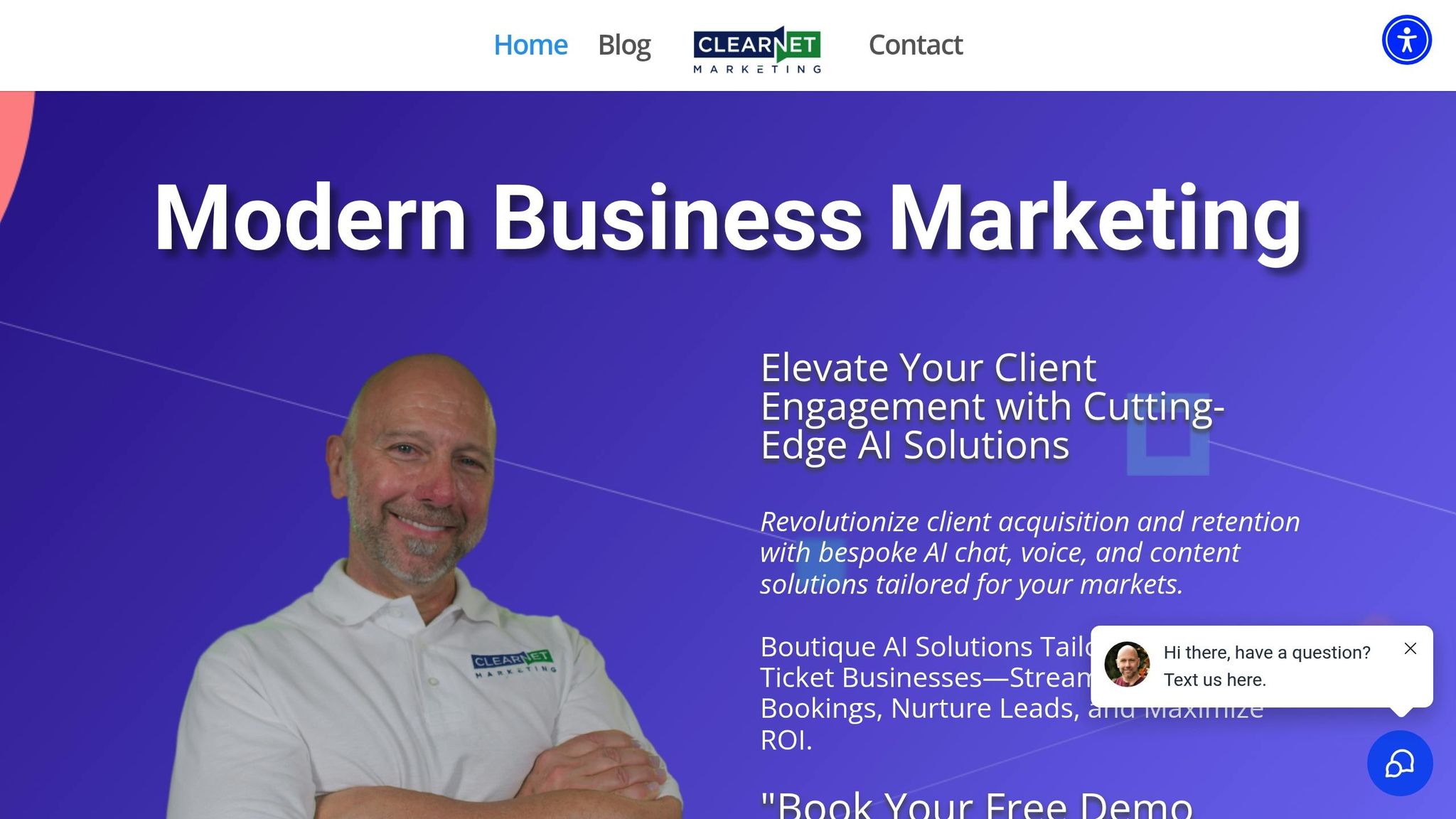
Clearnet Marketing specializes in AI-powered solutions designed for businesses navigating complex, high-value sales cycles. Their approach focuses on meeting the unique demands of long sales processes while maintaining a personal touch in every client interaction.
By building on the principles of AI CRM implementation, Clearnet Marketing enhances high-ticket sales engagement with tools and strategies tailored to the specific needs of these businesses.
AI Chat and Voice Automation for Lead Nurturing
Clearnet Marketing’s AI chat and voice automation tools are crafted to handle sophisticated conversations about intricate products and services. These tools ensure smooth, context-aware engagement across all touchpoints. Unlike basic chatbots that rely on generic responses, these systems maintain a natural flow of conversation throughout the sales journey. The voice automation feature takes personalization a step further by delivering consistent, human-like interactions – even after regular business hours.
"We help you build scalable systems that deliver personalized experiences at every touchpoint."
Additionally, their booking automation feature simplifies scheduling by managing calendars, suggesting ideal meeting times, and handling rescheduling requests automatically. This eliminates the hassle of manual coordination, saving time for both businesses and clients.
Scalable Systems for Personalized Client Engagement
One of the biggest hurdles in high-ticket sales is maintaining a personal touch while scaling operations. Clearnet Marketing addresses this challenge with AI-driven systems that adapt to each client’s unique behavior and preferences. These systems monitor every prospect’s journey, adjusting communication timing and style to match individual needs. The result? Every interaction feels thoughtful and tailored, no matter the scale.
Custom Client Acquisition and Retention Methods
Clearnet Marketing seamlessly integrates scalable personalization with targeted client acquisition strategies. Their approach is far from one-size-fits-all; instead, they align their methods with each business’s specific market and sales dynamics.
"We work with a limited number of clients to provide personalized attention and custom strategies."
Their strategies focus on converting website visitors into qualified leads and nurturing prospects through every stage of the sales cycle. These systems also track client satisfaction and engagement, triggering timely follow-ups when necessary. With content automation in place, businesses can keep clients informed with relevant updates, fostering trust and encouraging long-term relationships.
Pricing and Plan Options
Clearnet Marketing offers tiered service plans designed to meet the needs of businesses at various growth stages. Each plan includes targeted features to help companies optimize their sales processes:
| Plan | Target Business Size | Core Features | Best For |
|---|---|---|---|
| Basic | Small businesses | AI chat, basic lead nurturing, content automation | Companies new to AI automation with simpler sales needs |
| Professional | Mid-sized businesses | AI chat, voice automation, advanced lead nurturing, scalable systems | Growing businesses with established sales teams |
| Enterprise | High-ticket industries | Full AI suite, custom strategies, personalized client engagement, dedicated support | Large organizations with complex, high-value sales cycles |
The Basic plan is ideal for small businesses taking their first steps into AI automation, offering essential tools to streamline sales. The Professional plan introduces voice automation and advanced features, making it a great fit for mid-sized companies with growing sales operations. For enterprises managing intricate, high-value sales, the Enterprise plan provides a comprehensive AI suite, custom strategies, and dedicated support. All plans include ongoing optimization and support to ensure strong performance and a solid return on investment (ROI).
Conclusion: Maximizing ROI with AI CRM Methods
AI-powered CRM strategies are revolutionizing high-ticket sales by blending predictive analytics, automated personalization, and smart lead nurturing. These tools simplify long sales cycles and turn them into efficient, profit-generating processes.
With predictive analytics and automation at their core, AI CRM systems enable scalable and tailored customer interactions. By automating routine tasks, these systems free up sales teams to focus on high-priority, high-conversion opportunities. The result? Shorter sales cycles, better resource management, and higher conversion rates.
AI-driven chat and voice automation take customer engagement to the next level by being available outside standard business hours. This 24/7 accessibility is especially helpful in high-ticket industries, where potential clients often research and evaluate options during evenings or weekends.
For businesses in the U.S., tailoring AI CRM tools to meet local market nuances, communication preferences, and regulatory standards ensures smooth integration with existing workflows and delivers measurable ROI.
Another standout feature of AI CRM is its ability to predict churn risks. By identifying at-risk clients and triggering proactive engagement strategies, businesses can protect revenue and maintain strong relationships before clients consider switching to competitors.
Investing in AI CRM solutions not only boosts efficiency and conversion rates but also enhances customer satisfaction. As competition intensifies in high-ticket industries, businesses that adopt these intelligent systems gain an edge – both in attracting new clients and maximizing the lifetime value of existing ones.
This streamlined approach sets high-ticket businesses on a path to sustainable growth and long-term success. By improving data quality and refining strategies over time, companies can ensure these tools remain effective. For example, businesses like Clearnet Marketing are already helping organizations thrive in complex sales environments by using these AI CRM methods to achieve outstanding ROI.
FAQs
How do AI-powered CRM systems make managing high-ticket sales more efficient than traditional CRMs?
AI-powered CRM systems are transforming how high-ticket sales are managed by streamlining repetitive tasks like data entry, scheduling appointments, and managing follow-ups. By taking these time-consuming responsibilities off the sales team’s plate, they allow professionals to focus on what truly matters: building connections, creating tailored strategies, and navigating complex negotiations – key elements in high-ticket industries.
These systems also leverage customer data to uncover patterns in buying behavior, pinpoint high-value prospects, and customize outreach efforts. This kind of data-driven insight not only sharpens targeting but also helps reduce lengthy sales cycles, driving up both conversion rates and revenue. In essence, AI CRMs offer a scalable way to tackle the unique challenges of high-ticket sales while keeping the process efficient and results-oriented.
How can businesses prepare their data for AI CRM integration, and why is data quality so important?
To get ready for AI CRM integration, businesses need to ensure their data is complete, accurate, consistent, and error-free. A good starting point is conducting thorough data audits to spot and fix problems like missing information or duplicate entries. It’s also important to standardize data formats and clean up any outliers to establish a strong base for AI tools to work efficiently.
The quality of your data plays a huge role in how well AI-powered CRM systems perform. Clean, reliable data allows AI to generate precise insights, make dependable predictions, and automate processes effectively. On the flip side, poor data quality can lead to inaccurate results, erode trust in the system, and cause businesses to miss valuable opportunities. To make the most of AI in your CRM strategy, regular checks and updates to maintain high data standards are absolutely crucial.
What should US-based businesses consider when tailoring AI CRM tools to meet local market needs and regulations?
When adapting AI CRM tools for the US market, businesses need to focus on compliance with critical regulations like the California Consumer Privacy Act (CCPA) and emerging AI-related laws. Prioritizing strong data privacy and security measures is essential – not just for meeting legal requirements, but for earning customer trust.
Another key consideration is localization. AI tools should reflect US-specific standards, such as the dollar symbol ($) for currency, the MM/DD/YYYY date format, and imperial units for measurements. Aligning with these preferences helps create a seamless user experience and encourages smoother adoption.
Lastly, ensuring high-quality data is vital for successful personalization and lead nurturing. Accurate data not only enhances operational efficiency but also gives businesses a competitive edge, especially in industries with long sales cycles and high-value transactions.